Hey all,
Google’s spam update is still rolling, AI Overviews are invading branded searches, and Google has politely reminded publishers that AI-generated facts should preferably be true.
OpenAI has also released enough automation technology to let an agent operate a browser, delegate work and make mistakes at industrial speed.
Progress 
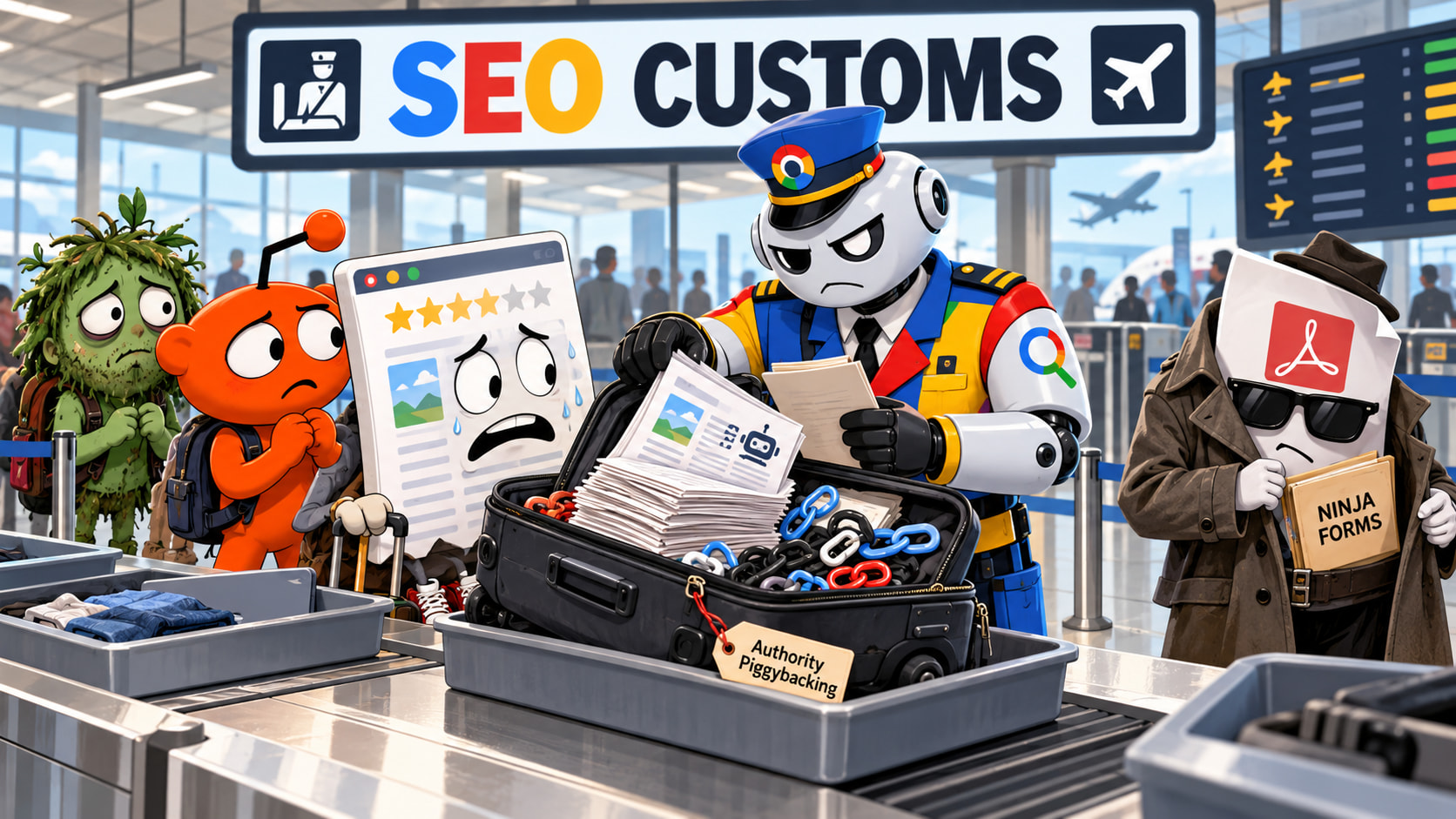
September’s Spam Update Appears to Have Entered a Second Phase
Status: Update confirmed; second impact wave observed
Google’s September spam update remains active. The official rollout began on 24 September and may take up to two weeks, which would mean completion by this Thursday. Google Search Status Dashboard
Tracking platforms and publishers reported one movement period between 25 and 27 September, followed by another around 30 September and 1 October. Google has not confirmed that these movements represent separate systems or phases. The observed second wave is documented here.
Why It Matters
If a review page held steady for the first few days but fell later, that does not prove your recent edits caused the drop.
Programmatic supporting content, thin rewritten pages and temporary authority-piggybacking assets remain sensible cohorts to watch. Claims that Google has specifically targeted AI sites, Reddit, Steemit or PDF exploits are still speculation.
Everyone knows exactly what the update targeted once their own site has dropped.
Funny, that.
What I’d Do
Keep the existing page cohorts untouched until Google confirms completion … and ideally don’t make any solid conclusions for at least 2 weeks after the update finishes.
This appears to be a big update and the effects of link weight recalculation will continue to settle for a while after the official completion date.
When you can’t wait any longer, for each cohort, compare pre-update to post:
- Search impressions
- Average position
- Indexed URL count
- Organic sessions
- Affiliate clicks and conversions
We are currently observing the patient while Google is still operating. Rearranging the internal organs at this juncture will not improve the diagnosis.
AI Overviews Are Appearing on Far More Branded Searches
Status: Third-party measurement, not a Google announcement
DemandSphere reports that AI Overviews appeared on 26.1% of its tracked branded queries on 1 September. That figure reached 80.2% by 28 September and 82.1% on 29 September.
The company counted an AI Overview whenever one appeared, even when the searched brand was not cited inside it. The size and composition of the tracked keyword set were not fully disclosed, so treat the percentages as directional evidence rather than the Ten Commandments. DemandSphere’s study
Why It Matters
Branded searches are usually among the safest and highest-converting queries for affiliate sites.
If Google inserts an AI summary above a product review, it can shape the user’s opinion before the user reaches your result. That summary might mention complaints, competitors, ingredients or refund information gathered from other sources.
You can rank first for the brand and still discover that Google has volunteered to conduct the pre-sale conversation, without being asked.
I’ve seen this first-hand. A high-ranking review (which is converting) was subjected to the AI overview treatment and traffic dropped off a cliff, along with the commissions.
Thanks so much, Google.
What I’d Test (if time was set at half speed)
Create a weekly screenshot panel for 20 branded queries:
- Product name
- Product name review
- Product name complaints
- Product name scam
- Product name ingredients
- Product name versus its main alternative
Record whether an AI Overview appears, which sources it cites, its overall sentiment and your organic CTR. It’s difficult to automate these checks without getting into proxies and the like but you could semi-automate by asking Chatty to build you a Chrome extension 
Also make sure the factual information on your review is explicit and current. Pricing, ingredients, guarantees and refund terms should not be buried inside 2,000 words of enthusiastic throat-clearing.
Google Now Explicitly Demands Manual AI Fact-Checking
Status: Confirmed documentation change
Google updated its guidance for generative AI content to say that publishers should manually fact-check and review AI-generated material for accuracy and trustworthiness before publishing. Google’s official guidance
This does not mean AI-written content is automatically penalised. It means an unattended prompt-to-publish system carries an increasingly obvious risk, particularly on health and commercial pages.
Why It Matters
This is directly relevant to automated review production.
A model can produce polished nonsense with excellent headings, correct schema and a tone suggesting it personally interviewed the manufacturer over lunch.
Formatting quality is not factual quality.
Google’s change also arrived during an active spam update. That timing does not prove the two are connected, but it is hardly encouragement to remove the final human review stage.
What I’d Do
Build verifiable fact-checking into your prompts and tell the AI not to fabricate anything. And if you care about the domain or property then manually review.
Let AI perform the tedious extraction and comparison work. Keep the final factual decision with someone who can be blamed in a meeting. Accountability remains one of humanity’s more durable competitive advantages.
I’ll be watching with interest whether authority beats fact as things settle out. There’s a lot of dubious ‘facts’ on Reddit … just sayin’
OpenAI Added Browser-Operating Agents and GPT-6.1 Sol
Status: Confirmed
On 29 September, OpenAI added computer use to its Agents API. An agent can now work through an OpenAI-hosted browser, with website approvals and sign-in managed by the application.
OpenAI also released GPT-6.1 Sol at $2 per million input tokens and $10 per million output tokens. It supports multi-agent delegation in beta. OpenAI API changelog
Why It Matters
This could automate awkward publishing steps that do not have clean APIs:
- Checking rendered review pages
- Validating links and CTAs
- Comparing product claims with source pages
- Entering approved drafts into publishing systems
- Capturing screenshots for QA
The multi-agent capability could also split research, drafting and verification into separate roles.
That sounds wonderfully organised.
It can also become three machines agreeing confidently with one another’s AIs about something none of them checked.
What I’d Test
Try logging into a parasite platform via ChatGPT and see if you can prompt an article to be published.
Does it work? How much of that workflow could you automate into a plugin? Imagine the possibilities!
Reddit and Parasite SEO Watch
Reddit remains prominent for many review and comparison searches. In my relatively limited web wanderings, Steemit seems to have taken a back-seat lately while I’ve seen Firstory and Beehiiv punching through into page 1 quite strongly. The opportunistic PDF exploits are also still producing results in the wild.
A significant change I’ve seen in the last week or so are Reddit citations featuring much more prominently in the AI overview. There’s a nice big traffic boost when you grab one of those
Authority piggybacking remains alive and kicking.
Long-term tenancy rights remain less certain … but that’s universal.
My Priority This Week
Keep building and leave my content alone until Google declares the spam update complete … measure after it all settles down
Calm measurement first.
Frantic tinkering later, if absolutely necessary.
Onwards!
- Rohan