So, let me guess. You opened your keyword tool, saw a list of “easy wins,” and felt that little spark of hope. Thousands of opportunities. Nice search volumes. Competition scores that whisper, “This time it’ll work.”
So you did what you were told to do. You wrote the articles.
You tweaked the title tags.
You polished the meta descriptions.
You tracked rankings like they were a pulse.
And then… traffic barely moved.
If that’s you, you’re not broken. Your strategy is just stuck in an older version of the internet.
Today I want to give you a controversial idea that might sting a bit, but also might set you free:
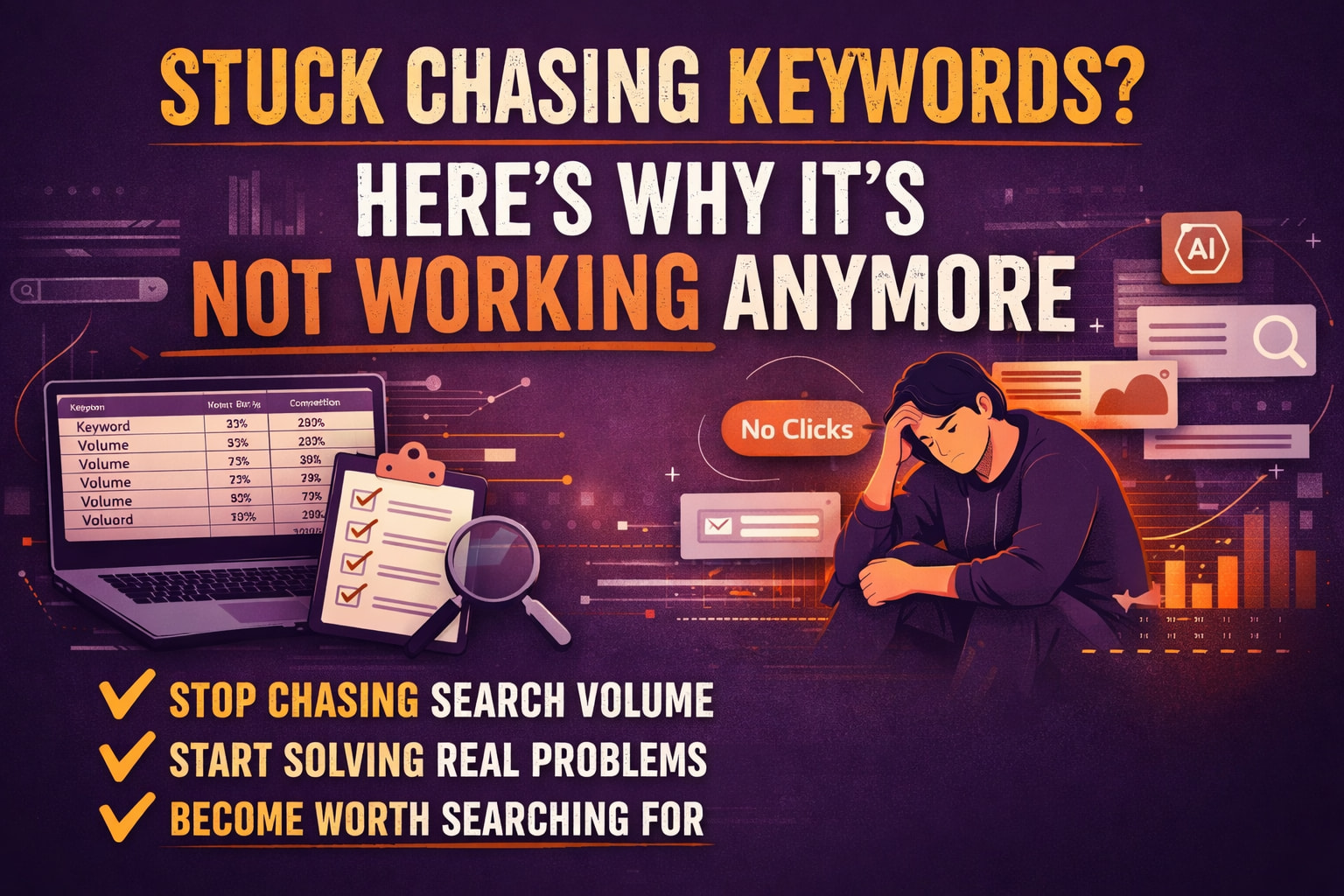
Keyword research didn’t stop working.
It mostly stopped being a strategy.
And the reason it hurts is that keyword research feels productive. It gives you numbers. It gives you certainty. It gives you a checklist. Humans love checklists. They are little lies we tell ourselves to feel calm.
But search does not reward calm. It rewards usefulness.
So let’s talk about what changed, why chasing keywords won’t save you anymore, and what to do instead.
The Spreadsheet Trap
Here’s the trap.
A keyword tool shows you “digital marketing tips.”
You think, “Perfect. I can write that.”
But your audience isn’t searching “digital marketing tips.”
They’re searching: “How do I market my small business on social media with no budget?”
That’s not a keyword. That’s a situation.
That’s a real person, probably tired, probably stressed, trying to solve a real problem.
And most keyword-driven content doesn’t answer situations. It answers phrases.
It writes around the question instead of into it.
And if you’ve ever wondered why your content feels “fine” but nobody sticks around, it’s often because “fine” is what you get when you write for the tool instead of the person.
The Moment I Realised Keywords Were Just… Comfort
I remember watching someone obsess over rankings.
Daily checks. Weekly reports. Lots of celebrating when a post jumped from position 9 to position 5.
Then we looked at the results.
Traffic didn’t budge. Leads didn’t budge.
Sales didn’t budge.
So what was the win?
It was a scoreboard. A number that looked like progress. A neat little proof of effort.
But modern search is not a neat little system.
Because Google is not matching words anymore.
It’s matching intent.
Search Doesn’t Care About Your Exact Words
Search engines have become better at understanding topics, relationships, and meaning.
A page about “best running shoes” can rank for hundreds of related searches that don’t contain those exact words, because the system understands the decision the person is trying to make.
That’s the shift: from “Did you use the keyword?” to “Did you satisfy the need?”
Which means you can be perfectly optimized and still lose if your content is thin, generic, or interchangeable.
And this is the part people don’t want to hear, but it matters:
If your content is basically the same as everyone else’s, keyword strategy doesn’t rescue it.
It just helps it blend in.
Even When You Rank, You Might Not Get the Click
Let’s say you do everything “right,” and you rank.
In 2016, that meant something.
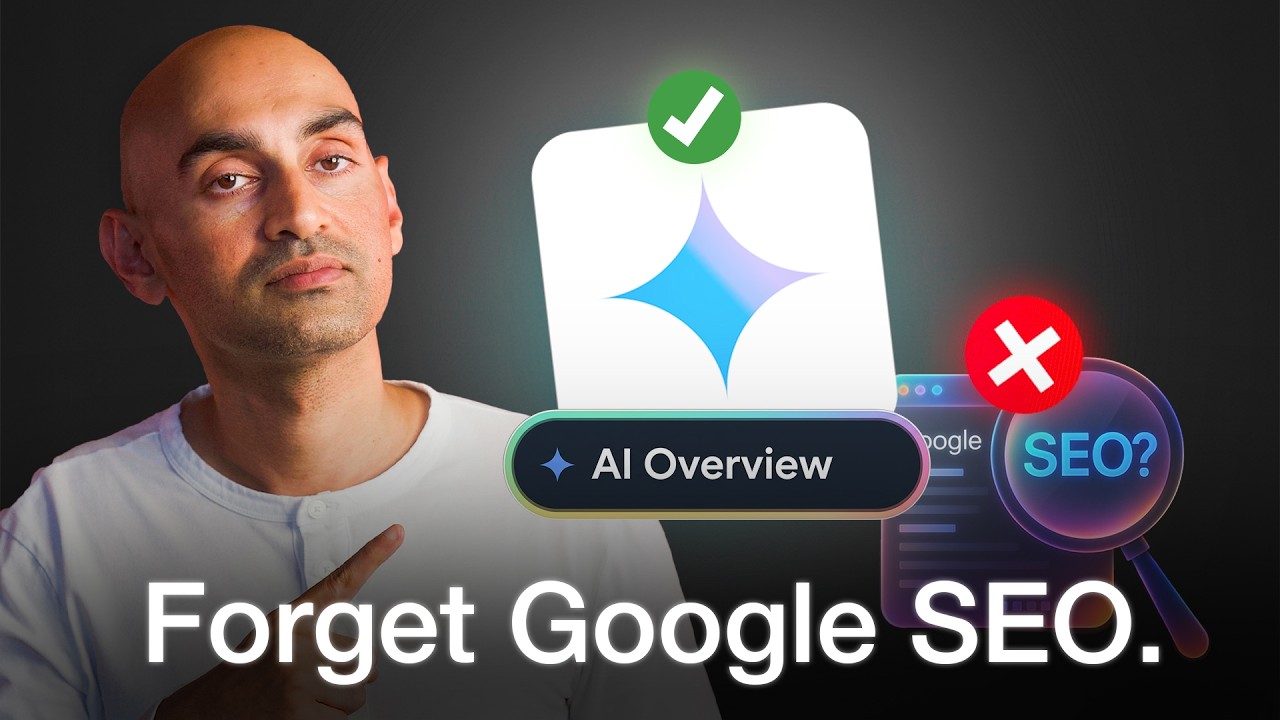
In 2026, it often means your content gets used… without you getting visited.
AI overviews. Featured snippets. “People also ask.” Local packs. Shopping blocks.
Your “perfectly optimized” article becomes source material for an instant answer that someone reads directly on Google.
You become the research assistant. Google becomes the storyteller.
And you’re left staring at your analytics like, “Wait. I won, didn’t I?”
Sometimes you did. It just didn’t pay.
Why Long-Tail Keywords Became a No-Click Game
Long-tail used to be the sweet spot.
All those specific questions. All those detailed queries.
Less competition. More qualified traffic.
Now? Those specific questions are exactly what search engines love to answer instantly.
So you’re targeting queries where the “best case scenario” is your site being referenced while the searcher never leaves the results page.
It’s not hopeless. It’s just different.
You need a different win condition.
Local and Commercial Search Are Their Own Beasts
Local search is a great example of how outdated keyword thinking can get.
People aren’t typing “coffee shop near me” and calling it a day.
They’re typing: “coffee shops with wifi open before 6 am near downtown.”
That’s not a keyword phrase.
That’s a filter stack. A real-life requirement list.
And commercial search? That’s a whole other mess.
If you’re targeting product and service keywords, you’re not just competing with other sites.
You’re competing with Google’s monetization features.
It can feel like trying to set up a shop inside someone else’s mall while they keep moving the doors and charging you rent for visibility.
The Competitor Copy Trap
Then there’s competitor keyword analysis, which sounds smart, but often turns into mass imitation.
Because competitor analysis tells you what they target, not what pays their bills.
Copying their keywords usually means chasing the same oversaturated terms, writing the same safe content, and hoping you can out-produce brands with bigger budgets, older domains, and stronger reputations.
Sometimes that works.
Most of the time, it’s just a slower way to stay average.
The Controversial Perspective
So here’s the spicy line I promised you.
Keyword research is now mostly a proxy for avoiding the harder work of becoming worth searching for.
Ouch. I know. But it explains why so many people are “doing SEO” nonstop, and still feel invisible.
Because keyword research gives you a task.
Brand building gives you responsibility.
And responsibility is annoying. Humans hate that.
What to Do Instead
So what’s the shift?
Stop treating keywords like a strategy.
Treat them like a clue.
Your real job is intent fulfillment.
Ask:
What is the person trying to accomplish?
What decision are they trying to make?
What fear or frustration is behind the search?
What would make them feel confident?
Then create content that answers scenarios, not phrases.
Build topical authority by covering a subject like someone who actually understands it, not like someone trying to sprinkle the keyword in the first paragraph.
Write in full sentences. Use real context. Include constraints. Speak as your audience speaks.
And measure outcomes, not rankings.
Because rankings are increasingly personalized anyway. Your tool might show an “average position,” but your actual audience is seeing a different set of results based on location, history, device, and timing.
So if you’re going to obsess over a metric, make it one tied to reality:
Engagement. Leads. Sales. Brand searches. Returning visitors.
The stuff that keeps the lights on.
Here’s the simplest way to think about it.
The old SEO mindset was:
“Find the right keyword, and you’ll get traffic.”
The modern mindset is:
“Be the best answer to a real problem, and search will find a way to surface you.”
Not always instantly. Not always fairly. Not always consistently. But sustainably.
And if your content genuinely helps, people do something even better than click.
They remember you. They come back. They search your name.
They share your work. They trust you.
And no keyword tool can measure that properly, which is exactly why it matters.
If this hit a nerve, good. That means you’re close to something real.
Thanks for reading. If you want more articles like this, subscribe and share it with someone who’s still living in a keyword spreadsheet. They deserve a better hobby.