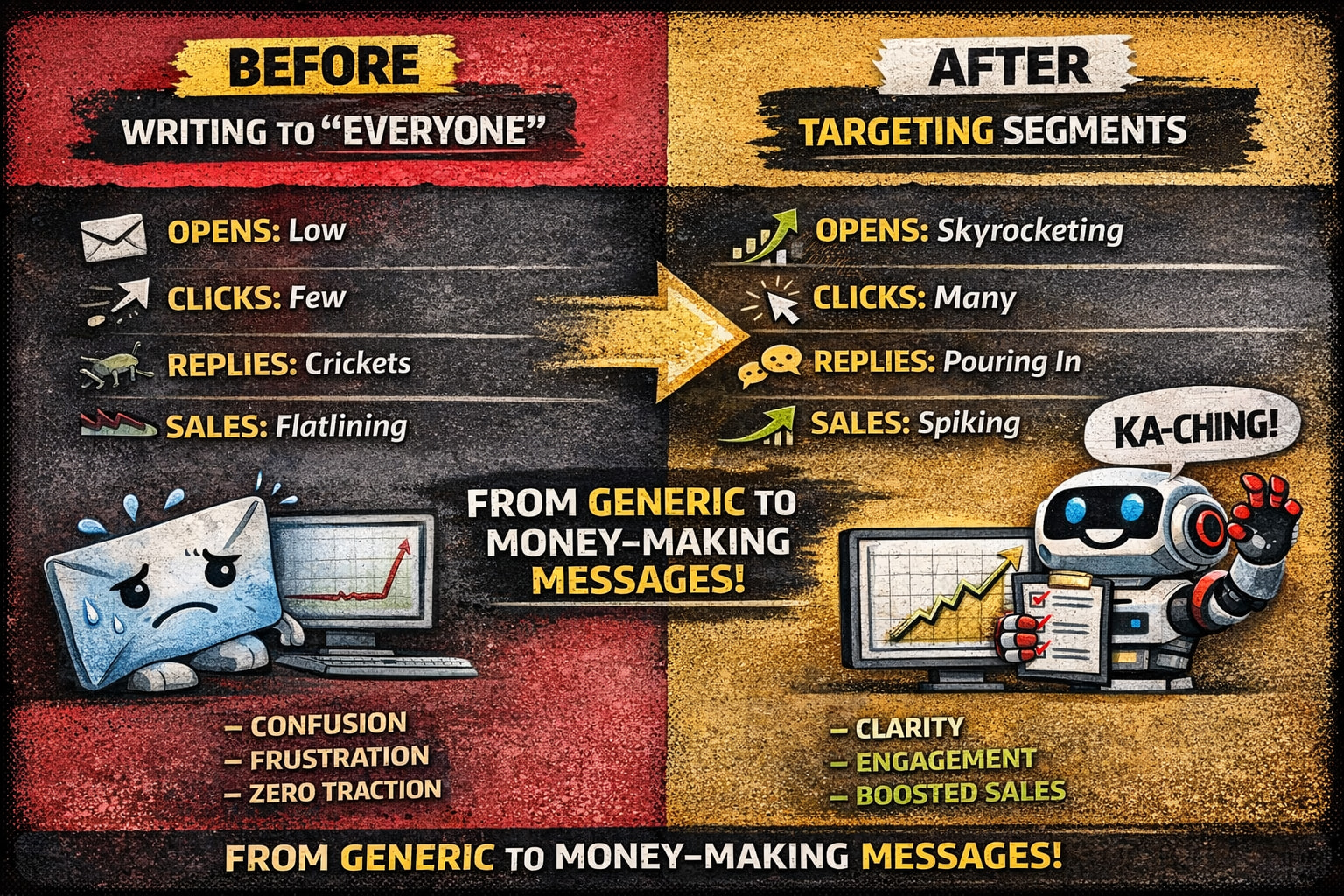
So, ever write something you’re proud of, hit publish, send the email… and the response is basically silence?
No replies. No clicks. No sales. Just you, staring at your analytics as if they owe you an apology.
Here’s the uncomfortable truth: most of the time, it’s not your offer. It’s not “the algorithm.” It’s not even your writing.
It’s that you’re talking to “everyone.”
And “everyone” never feels spoken to.
Today, we’re talking about segmentation. Specifically, how to use AI to segment your niche audience so your content feels personal, relevant, and impossible to ignore.
And no, this does not require a 47-question quiz funnel, a psychology degree, or you spending your weekend trapped in spreadsheet purgatory.
Let me start with a quick story.
A while back, I watched a marketer do something that looked almost unfair.
Same niche. Same product category.
Same email list size as their competitors.
But their emails consistently got more replies, more clicks, and more sales.
At first glance, it looked like they’d cracked some secret subject line formula.
They hadn’t. They were doing something simpler: they were writing different versions of the same message for different types of people.
Not “men vs women.”
Not “age ranges.”
Not “beginner vs advanced,” although that can matter too.
They were segmented by mindset. By emotion.
By what people believed was true, and what they were afraid would happen if they stayed stuck.
And the result was wild: readers felt seen. And when people feel seen, they stop scrolling and start leaning in.
That’s what segmentation really is.
Not demographic labels. A message that lands because it matches someone’s internal reality.
Why ‘Everyone’ Never Buys
So let’s define the problem.
Most marketers guess who their audience is, then write one piece of content and hope it works for everyone.
But when you write to everyone, you blur the edges of your message.
You stop sounding like you know who you’re talking to.
And you lose the people who would have said yes if the message felt like it was meant for them.
Segmentation fixes that. Because it lets you tailor offers, emails, and content to specific types of people within your niche.
When the reader thinks, “That’s me,” their guard drops.
Trust rises. And action follows.
The catch is that segmentation usually takes time.
It can mean surveys, interviews, testing, guesswork, more testing, and then wondering why you didn’t just become a beekeeper instead.
This is where AI is genuinely useful.
Not as a magical “make money” button.
As a shortcut to clarity.
AI can help you quickly map the micro-segments inside your niche based on things like:
beliefs, emotional triggers, goals, experience levels, buying behaviors, and the hidden reasons people hesitate.
Instead of vague segments like “new moms” or “freelancers,” you can get sharper:
Who’s overwhelmed and needs simplicity?
Who’s skeptical and hates hype?
Who’s almost ready to buy but stuck on one objection?
Who wants speed, and who wants safety?
Once you can see those groups, your messaging gets easier.
Because you’re no longer trying to convince everyone at once.
You’re having one focused conversation.
How AI Finds the People Inside Your Niche
Now here’s the fun part.
You do not have to reinvent all your content.
You can use AI to rework what you already have.
Same lead magnet, different angle.
Same product, different positioning.
Same blog post, but the intro speaks directly to a specific mindset.
It’s not more work. It’s smarter work. So let’s get practical.
Here’s a base prompt you can run in ChatGPT:
“List 5–7 micro-segments inside the niche of [your niche] based on beliefs, emotional triggers, goals, and experience levels. For each segment, include a short description of what they want most, what’s stopping them, and what kind of messaging would resonate.”
That prompt alone will usually give you better audience clarity than most marketers get in months of guessing.
Let’s test it in a few markets so you can hear what this sounds like.
First: the survival or prepping niche.
If you run the prompt, you might get segments like:
-
The Anxious Newbie
They want to prep, but they’re overwhelmed and don’t know where to start.
Messaging that works: calming, simple, focused on quick wins. -
The Frugal Skeptic
They don’t trust mainstream advice. They hate hype. They want proof and low-cost options.
Messaging that works: practical, data-backed, no drama. -
The Family Protector
They’re driven by keeping their partner and kids safe.
Messaging that works: emotional hooks, responsibility, “here’s how you protect them without panic.” -
The Gear Addict
They love buying tools but lack a plan.
Messaging that works: strategy, systems, “stop hoarding, start preparing.” -
The Stealth Prepper
They want privacy and subtlety.
Messaging that works: discretion, low-profile strategies, “be ready without broadcasting it.”
Notice what just happened. Same niche. Totally different reasons for buying.
Different fears. Different motivations. Different objections.
Which means different subject lines. Different lead magnets. Different sales page angles.
Now, take the weight loss niche.
You might see segments like:
The exhausted “I’ve tried everything” person who feels hopeless.
The busy parent who needs fast, realistic options.
The health-first person who hates tracking and restriction.
If you create one bland opt-in, it will land weakly for all three.
But if you create three versions with different hooks, you get traction.
The freebie can be similar. The angle changes everything.
And then the marketing niche.
Say your topic is email copywriting.
You might get:
Total beginners who are afraid of sounding spammy.
Mid-level writers who write too much and confuse readers.
Veterans who want a sharper punch with fewer words.
Same topic. Different struggles.
So instead of writing “Email tips for everyone,” you write:
“Email tips for the person who overexplains.”
Or:
“Email tips for the person who’s terrified of being annoying.”
Or:
“Email tips for the person who already knows the basics and wants stronger conversions.”
That is how segmentation turns generic content into content people save, share, and act on.
Now, once you have your segments, what do you do with them?
A lot, without going overboard.
Here are a few practical plays:
You can create multiple opt-in paths, each tied to a specific problem.
You can write a welcome series for each segment.
You can use a simple quiz funnel where people self-select.
You can even rewrite your product page from three or four angles and test which one converts best.
And this is important: this isn’t busy work.
This is a shortcut to clarity.
Because when you know who you’re talking to, you stop second-guessing every sentence.
Now let’s talk about a second technique that’s almost unfair in how useful it is. Reverse-engineering.
Take an email or blog post you’ve already written. Paste it into ChatGPT. Then ask:
“Which niche audience segment would this message appeal to most, and how could I tweak it for three other segments in my market?”
This is great because it spots blind spots you might not see.
AI might tell you:
Your content is perfect for beginners, but it alienates advanced users.
Or your tone is too gentle for buyers who want fast results.
Or your examples skew toward one mindset.
That feedback can save months of trial and error.
You stop wondering why something didn’t work.
You start tailoring from the beginning.
There’s one more trick I love, especially if you sell a product.
Give ChatGPT your offer and ask:
“List five types of people in [your niche] who would benefit from this product, but for very different reasons. For each, write one sentence of copy that would speak directly to their situation.”
This gives you positioning angles you might never come up with alone.
You might even discover a segment you didn’t realize existed.
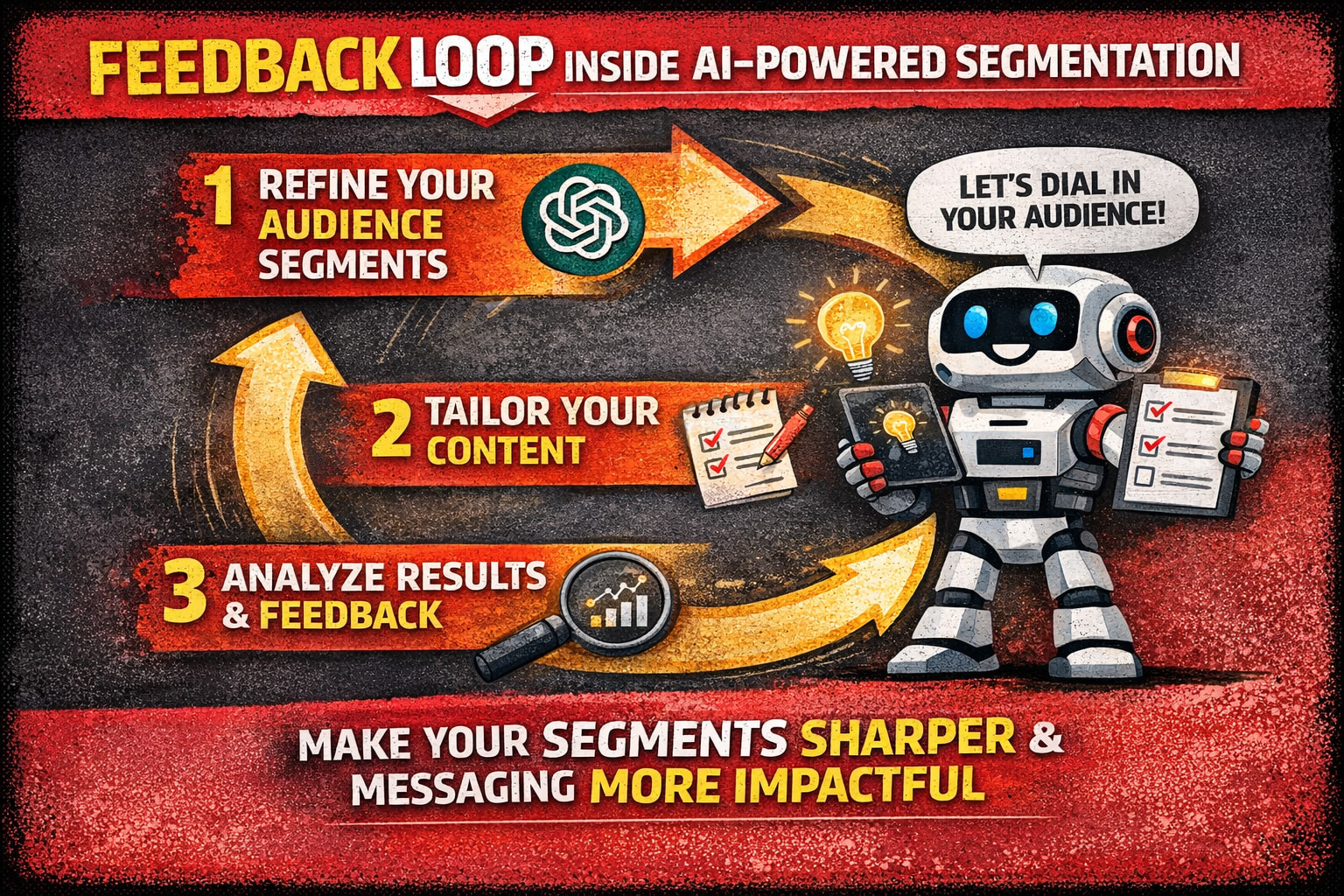
And once you spot a new segment, you can go deeper:
What kind of lead magnet would they want?
What objections would they have?
What urgency would they respond to?
Every answer makes your message sharper.
Your Quick Action Plan
Now, let’s wrap this into something you can actually do today.
Here’s your challenge:
Open ChatGPT and run the first prompt tailored to your niche.
Make sure it describes each segment’s mindset, fear, and motivation.
Then choose one segment you aren’t currently writing for.
Go find an email, blog post, or opt-in you already have.
Ask ChatGPT to rewrite it specifically for that segment’s language and goals.
Then use it. Don’t overthink it. Don’t wait until it’s “perfect.”
Publish the segmented version and watch what happens.
And if you’re comfortable tagging subscribers, keep it simple:
Add one question to your opt-in form.
“What’s your biggest struggle right now?”
Give them a short drop-down list that matches your segments.
You don’t need a fancy quiz.
One clean question is enough to sort people into smarter automations.
That’s it. Segmentation is not complicated. It’s just intentional.
And AI makes it fast enough that you can actually do it consistently, instead of treating it like a someday project.
If this article hit a nerve, good. That usually means there’s money on the other side of the fix.
Stop writing to “everyone.”
Pick a segment. Write like you mean it.
And let AI help you get specific without getting stuck.