If you’ve made it this far and taken action at every stage, you should now have a fully functioning website firing on all cylinders. Plugins and all.
The setup is finally complete … congratulations! You’ve done well to get here 
Now the vibe changes and it’s around this point in the process that many beginners hit the same wall.
The site exists and you have all the pages you need in place.
… your cursor blinks.
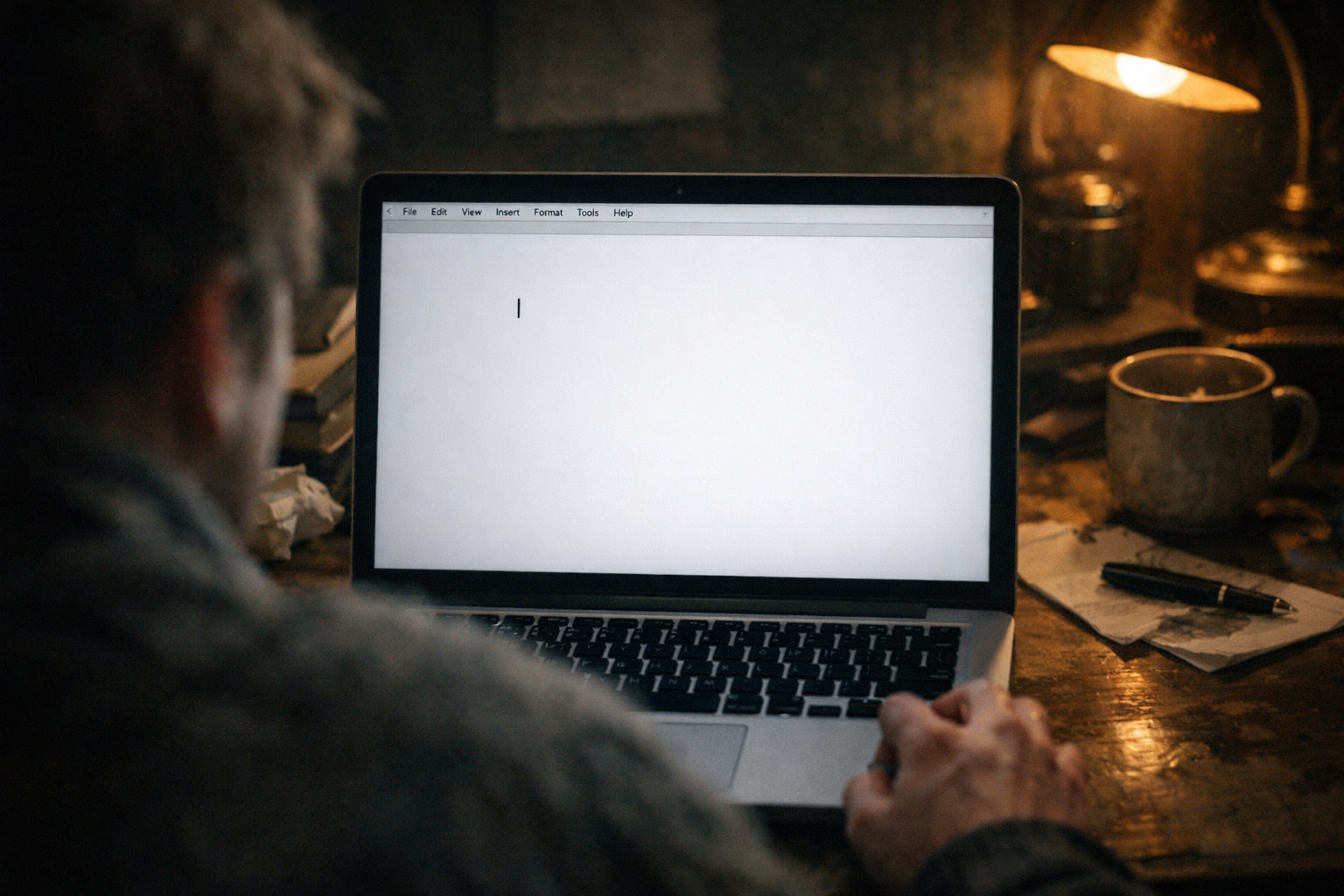
The mind’s a blank. Anyone can write an article, but suddenly you feel like the first article has to be super important. A seminal piece.
It does not.
Why writing feels harder than setup
Setup feels private. Writing feels public.
When you write an article, you are putting a personal thought somewhere other humans can see it. That tends to wake up every insecurity you thought you left behind years ago.
That feeling is perfectly normal. It is not a warning sign.
Take a deep breath … you can do this. Step by step.
What your first article is actually for
- Your first article is not about traffic.
- It is not about expertise.
- It is not about proving anything.
It is about publishing something real, written by you with your own quirky opinions and unique knowledge.
Once you do that, the site stops feeling theoretical and starts feeling like something useful.
Choose a topic you already understand
This is the most important decision in the whole process.
Do not pick a topic because you think you should write about it. Pick something you already know, recently learned, or had to figure out yourself.
Familiar topics reduce hesitation. Confidence follows when you have clarity of thought.
Give the article a clear, honest title
The title sets expectations for both you and the reader.
A clear title makes writing easier because it keeps you focused. It also helps readers know what problem you are solving for them.
You are not writing headlines for a magazine. Accuracy beats cleverness every time.
Whether you love it or hate it, AI can give you some great ideas for your title which you may not have thought of. Try this prompt I created for the DMC community which generates 7 unique, click-worthy headlines - link below:

A simple structure that always works
Start with the question
What is the one thing this article answers.
If you cannot describe that in one sentence, the article is trying to do too much.
Answer the question early on. Ideally in the first paragraph.
Explain it like you would out loud
Imagine someone asked you this question casually.
You would not open with a dramatic introduction. You would explain it in plain language, step by step. That’s the version you need to write.
If it sounds human, you are doing it right.
Break it into small sections
Headings help readers skim and help you avoid writing a wall of text.
One idea per section. Expanding on the idea per paragraph. This keeps writing manageable and reading pleasant.
End with a simple takeaway
What should the reader understand or do differently after reading.
You do not need a grand conclusion. A clear final thought is enough.
Format for humans, not perfection
- Short paragraphs are easier to read.
- Lists help break things up.
- White space is your friend.
If a paragraph starts to look like a small novel, it is time to split it. Some copywriting experts recommend one sentence per paragraph (two max) for online copy.
Do what feels natural to you. The more you do this the easier it gets.
Link to one other page on your site
This can be very simple.
Link to another article if it complements the one you’re writing. If this is your first article then just link to your ‘About’ page.
This helps readers explore and helps your site feel connected instead of isolated.
A few habits that make writing easier
Write badly first
Your first draft is supposed to be rough. Just get your thoughts down quick.
Thoughts can be very transient 
If you wait for it to sound good, you will never finish. Editing exists for a reason.
Do not reread while drafting
That blinking cursor is already intimidating enough.
Write forward. Fix later. You can argue with your sentences tomorrow.
A small but useful tip
If you spend twenty minutes rewriting the first sentence, stop.
No one on the internet is waiting to judge your opening line. Just move on to the next section.
You’ll find, as you flesh out the article, that pesky first sentence is much more easy to fix because you now have some context.
What to do after you publish
Hit publish.
Take a moment to pat yourself on the back.
Walk away for a bit.
Resist the urge to immediately rewrite everything. Time and distance makes your judgement so much better and you can begin to set a content review schedule.
Reread the article in a month from now. Tweak it … tighten it up or flesh it out a bit. Whatever feels right. There’s no real hard and fast rules.
Just keep it on point and don’t wander off into tangents that might confuse the reader!
A final reality check
Your first article will feel awkward when you reread it in six months.
That is not a failure. That is evidence of your progress.
If your old writing does not make you cringe at least a little, you’re either a literary genius or something went wrong.
Coming next
Post #10, the last post in this series, will cover what happens after you publish. Traffic expectations, search engines, and how to avoid quitting when things feel very quiet (which they will).
If you want some feedback on your first article, share it here. Everyone starts somewhere and nobody here expects perfection.
Feel free to hit reply below and link to your piece with an explainer sentence or two for background if poss.
See you in the final instalment.
- Rohan